Continue To Site >
Quicklinks
  • Ask Whole Foods Mag
  • Magazine Subscription
  • View Back Issues
  • Advertise
  • Education Center
  • Ashwagandha / Shatavari Experience
  • Naturally Informed
  • Move Nutrition
  • India-America Boardroom Series
Free Newsletter Subscription
Ask WholeFoods Mag
  • News
    • All News
    • In Case You Missed It
    • Breaking News
    • Grocery News
    • Dietary Supplements News
    • Supplier News
    • Health & Beauty Aid News
    • Green News
    • Research
  • Features
    • Supplements
    • Grocery
    • Health & Beauty Aids
    • Suppliers
  • Columns
    • Debates
    • Editorial
    • Good Health Reads
    • Happy Customer
    • Herb of the Month
    • Leadership Profiles
    • Legal Tips
    • Mentors
    • Merchandising Insights
    • Recipes
    • Naturally Informed Education
    • The Nutrition Mythbuster
    • Trade Secrets
    • Vitamin Connection
    • What's Selling
    • WholeFoods Blogs
  • Products
    • Dietary Supplements
    • Grocery Products
    • Gourmet Products
    • Health & Beauty Aid Products
    • New Product Reviews
      • 2021 Archives
      • 2019 Archives
      • 2018 Archives
    • Suppliers
  • Multimedia
    • Videos
    • Podcast
    • The Natural View
  • Directory
Ask WholeFoods Mag
  • Log In
  • Register
  • Log Out
  • My Account
Free Newsletter Subscription
Quicklinks
  • Ask Whole Foods Mag
  • Magazine Subscription
  • View Back Issues
  • Advertise
  • Education Center
  • Ashwagandha / Shatavari Experience
  • Naturally Informed
  • Move Nutrition
  • India-America Boardroom Series
Home » Blogs » WholeFoods Magazine » Can Melatonin Help You Sleep & Fight COVID-19?

WholeFoods Magazine
WholeFoods Magazine RSS FeedRSS

Dhpa8934 r v2 s 1

Can Melatonin Help You Sleep & Fight COVID-19?

December 10, 2020
Jason DuBois
With the recent news of COVID and the presidential election of 2020, many have been experiencing higher levels of stress and loss of sleep. Sleep is a critical component to a strong immune system and recent news has also reported Melatonin as a treatment for COVID-19.


I have received many questions about Melatonin, so I’ve put together a quick list of Top 5 Questions and Answers About Melatonin.
1. WHAT IS MELATONIN?
Melatonin is a natural hormone primarily that regulates the sleep–wake cycle. The pineal gland will release this hormone in the late evening causing you to feel sleepy and initiate the sleep cycle. Melatonin levels will reach their peak sometime between 2 am and 4 am.
2. IS MELATONIN SAFE?
Adults: Melatonin has been used safely for up to 2 years in adults, however, it is not without potential side effects. When using melatonin long term, watch for these side effects:
  • Headache
  • Feelings of depression
  • Daytime sleepiness or dizziness
  • Stomach cramps
  • Irritability
**Do not drive or use machinery for four to five hours after taking melatonin.**

Children: Melatonin is possibly safe when taken by mouth, short-term. Recommended doses are 3 mg per day in children and 5 mg per day in adolescents.  See below for more details on dosing.
3. HOW DOES MELATONIN WORK?
Melatonin's primary function is to help regulate night and day cycles or sleep-wake cycles. Darkness will trigger your body to produce more melatonin and signal the body for sleep. Exposure to light will have the opposite effect and decrease melatonin production. Some people who have trouble sleeping have low levels of melatonin and supplementing with Melatonin tablets can help improve sleep.
4. WHAT IS THE BEST DOSE*?
There are several indications and doses where using Melatonin could be beneficial. I will cover the uses and doses where it has been shown to be the most beneficial. *
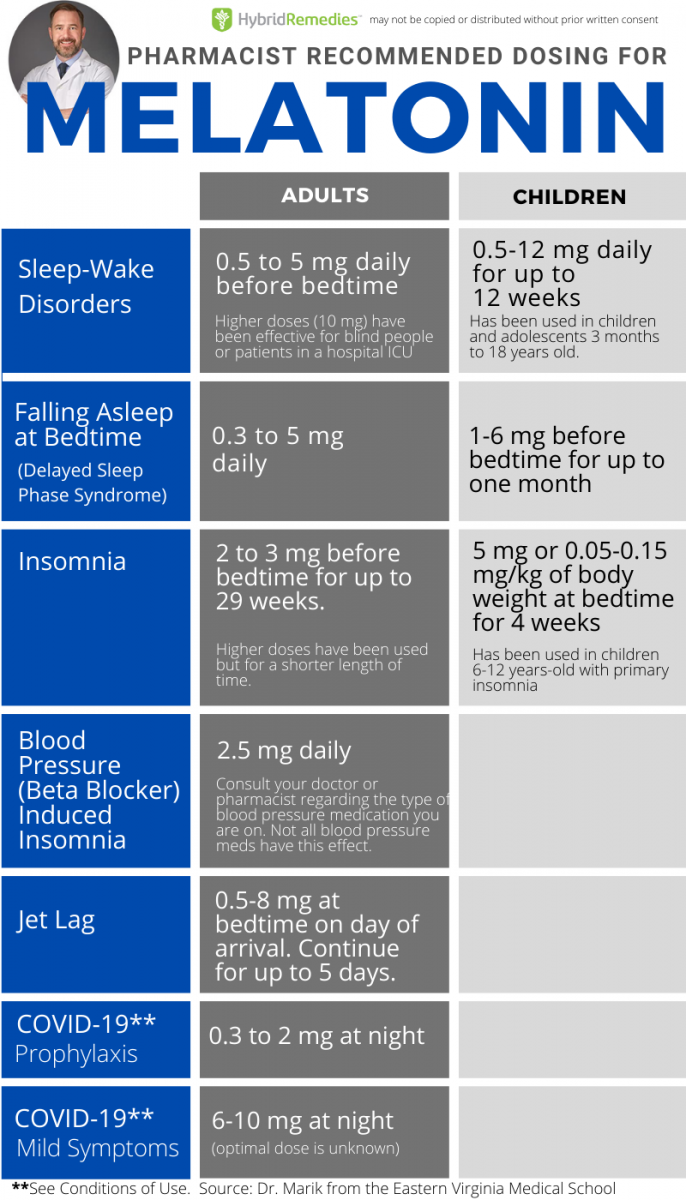
5. HOW LONG does it take for MELATONIN to start working?
Melatonin doses of 1-3 mg will take effect in one to two hours to induce sleep. It is best to take melatonin supplements two hours before bedtime.

 
BONUS: Pro Tips from Your Pharmacist When Taking Melatonin
It is important to note that Melatonin does not work for everyone and moreover, works best when you practice good sleep hygiene. Here are some of my professional tips I give to my patients when recommending Melatonin.
  • Tip #1: Prep your mind for bedtime by turning the lights down to a lower level. Melatonin cannot work effectively if you are watching TV or staring at your phone.
  • Tip #2: Stop Melatonin if it is not working. If after 1-2 weeks you do not see improvement, stop taking the supplement. There are other supplements that may work better for you.
  • Tip #3: Stop using your computer or smartphone —as hard as this is for all of us, if you want a good nights sleep, put the phone down early. Research has shown the blue and green light from these devices neutralize melatonin’s effects.
  • Tip #4: Less is more when it comes to taking Melatonin. A dose of 1-3 mg is generally effective for most individuals.

*CONDITIONS OF USE AND IMPORTANT INFORMATION: This information is meant to supplement, not replace advice from your doctor or healthcare provider and is not meant to cover all possible uses, precautions, interactions or adverse effects. This information may not fit your specific health circumstances. Never delay or disregard seeking professional medical advice from your doctor or other qualified health care provider because of something you have read on this site or published by Hybrid Remedies. You should always speak with your doctor or health care professional before you start, stop, or change any prescribed part of your health care plan or treatment and to determine what course of therapy is right for you.

Recommended For You
Latest Publication
Screenshot_2026-05-26_at_7.47.16_AM.jpg
June/July 2026
CovHeart.jpg
2026 Deep Dive Cardiovascular Health
Screenshot_2026-04-16_at_11.51.39_AM.png
May 2026
CovMi26.jpg
2026 Mastering the Microbiome Market
Most Popular
  • Anaheim Convention Center hosted four days of innovation, education, networking, and trendspotting at Expo West 2026.

    Expo West 2026 Trend Report: Innovation, Transparency & Functional Wellness

    By WholeFoods Magazine Staff
    May 26, 2026
  • Fostering mental wellness.

    The Pillars of Mental Resilience

    By Jennifer Joseph
    June 1, 2026
  • Yogurt-probiotics-GettyImages-2217529941.jpg

    Rethinking Lactose Intolerance: The Role of Probiotics and Prebiotics

    By Clare Fleishman, MS RDN
    May 22, 2026

WholeFoods Magazine is your one-stop resource for health and nutrition articles. We provide important information regarding industry news, research, and trends.

The Magazine

  • Current Issue
  • Subscribe
  • Renew
  • Change of Address

Information

  • Source Directory
  • Helpful Resources
  • Job Finder

About Us

  • About Us
  • Contact Us
  • Advertise

Social

NOTE: WholeFoods Magazine is a business-to-business publication. Information on this site should not be considered medical advice or a way to diagnose or treat any disease or illness. Always seek the advice of a medical professional before making lifestyle changes, including taking a dietary supplement. The opinions expressed by contributors and experts quoted in articles are not necessarily those of the publisher or editors of WholeFoods.

© Copyright 2026 WFC, Inc. All Rights Reserved.
Privacy PolicyTerms