RSS
RSS
Quicklinks
WholeFoods Magazine

Chocolate and Conservation
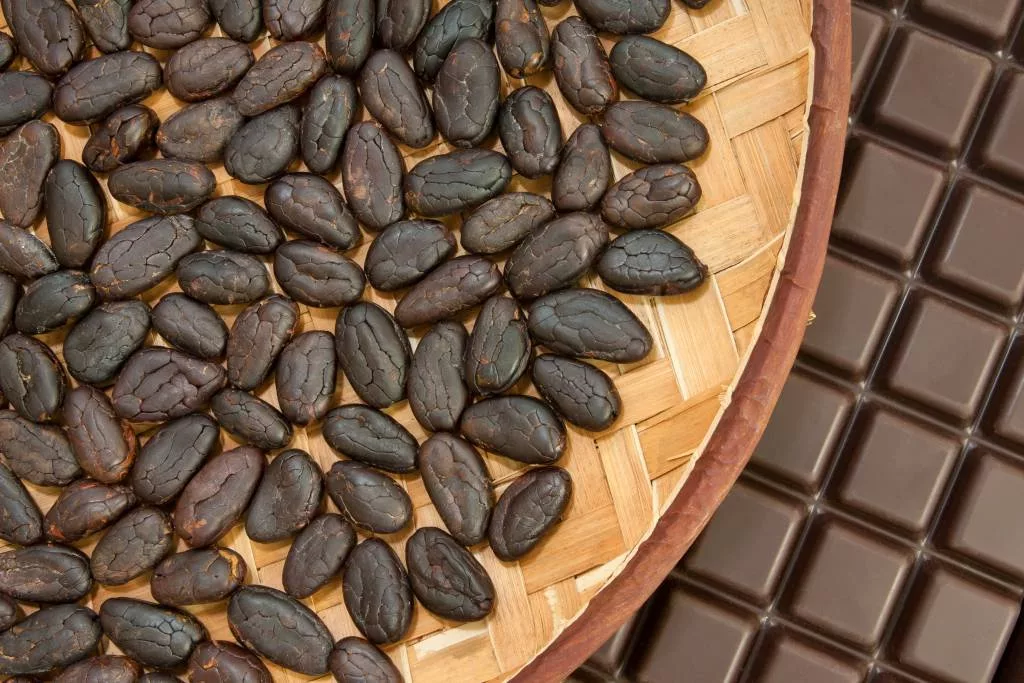
In 1999, I traveled to Madagascar as a Peace Corps Volunteer. I never imagined that 20 years later, I’d be running a chocolate company in one of the most environmentally challenged countries on the planet. There were many lessons along the way, and undoubtedly there will be more to come. Beyond Good recently celebrated one year and one million bars at our chocolate factory, where we source organic, heirloom cocoa from 100 farmers and employ 42 full-time employees right in Antananarivo, Madagascar. Some of what I’ve learned along the way:
Note: The views and opinions expressed here are those of the author(s) and contributor(s) and do not necessarily reflect those of the publisher and editors of WholeFoods Magazine.
- Solve the big problem first. Before we can talk about the environment, we must address poverty. Madagascar has the highest rate of extreme poverty in the world. People living in extreme poverty don’t have time for the environment. Our original motivation to make chocolate in Madagascar was to reduce poverty. We couldn’t even think about biodiversity, carbon sequestration, climate change, conservation and zero-deforestation. When farmers make a living wage, they can look to the future.They can send their children to school and plant more trees on their farms. Addressing poverty opens the door to environmental impact.
- Go direct. According to the World Cocoa Foundation, 70% of the world’s cocoa is grown in Africa. Yet, less than 1% of the world’s chocolate is produced there. Supply chain fragmentation drives poverty, child labor, monocropping and environmental degradation. Most farmers earn less than $1USD a day. The traditional African cocoa supply chain involves three to five layers of intermediaries. To us, fair trade wasn’t enough. Direct trade allows us to make the socioeconomic change needed to address poverty with traceability across the entire supply chain.
- The answer is right under your canopy. The environmental stakes in Madagascar are high. 85% of plants and animals in Madagascar are found nowhere else in the world. But because of the extreme rate of poverty, 90% of its original forest has been lost—branch by branch, year after year, for hundreds of years. Cocoa grows on trees, and cocoa trees grow best under a canopy. When we first started to take note that cocoa farmers had the potential to effectively reforest land that had been deforested for generations, we began to wonder: Could cocoa forests support lemurs? Our friends at Conservation International and the Bristol Zoological Society were curious, too. The researchers spent six months sleeping in the cocoa forests, conducting tree counts and taking soil samples, while employing night cameras and recording acoustics. They found that not only could these cocoa forests support lemurs, but these cocoa forests already were supporting lemurs. They identified five species of endangered lemurs, 19 species of birds, several species of chameleons and even the Madagascar flying fox. We didn’t set out to save endangered species, but cocoa agroforestry did provide habitat for lemurs on the brink of extinction.
Note: The views and opinions expressed here are those of the author(s) and contributor(s) and do not necessarily reflect those of the publisher and editors of WholeFoods Magazine.
Recommended For You
Latest Publication

August 2026
June/July 2026

2026 Deep Dive Active Nutrition Market

2026 Deep Dive Cardiovascular Health